
How to Improve Math Skills: Using Casino Games as Educational Tools for Foundational Math Development
Online casino games are a great way to learn about probability and math. It can be hard for math teachers to keep students interested when ideas aren't clear or have nothing to do with real life. On the other hand, gambling games show how chance, numbers, and math can be used in real life. By looking at the mathematical concepts behind these games, such as figuring out odds and risk patterns, students can improve their basic math skills and learn how numbers work in real life. This way makes math easier to understand and more useful by connecting general ideas to things that happen in real life. The right way to use these games as teaching tools is to show why math skills are important outside of school and how thinking about numbers affects the choices we make every day.
What Probability Can Do to Help You Learn Basic Math
There are a lot of hard math ideas that students learn in school, and probability theory helps them understand them. When students study probability, they don't just look at one answer. Instead, they think about chances, rates, and long-term trends. This change in the way you think opens up your mind and gets kids ready for harder work in math, science, and statistics.

Using odds to help you understand fractions and percentages
Sometimes, the outcomes of gambling games are shown as fractions or percentages. There are many chances to get better at switching between these types of numbers. When students figure out that flipping a coin has a 50% chance, they learn about basic connections between different ways to talk about numbers. Chance is a great subject to learn this important skill because these numbers are used all over math and science. It helps students remember these links by making them happen over and over again when they do chance calculations.
Getting better at recognizing patterns and making predictions
Students learn how to find trends and guesses based on facts better when they work with chance. Students learn how to look at information in a planned way and guess what will likely happen instead of picking at random. You don't have to think this way just in games. Students use it to figure out what the weather means, judge science projects, and make decisions when they don't have all the facts. Students can learn in all STEM areas by being able to see trends in the things they see.
Playing Casino Games Online to Improve Your Basic Math Skills
Since casino games require you to do math all the time, they are actually good for improving your computational skills. It's important for players to be able to quickly add up card values, figure out percentages, compare odds, and keep track of totals. These are all basic math tasks that improve numerical thinking. By doing the same math over and over, you build up the automatic memory and mental math skills that you'll need for more difficult math work.
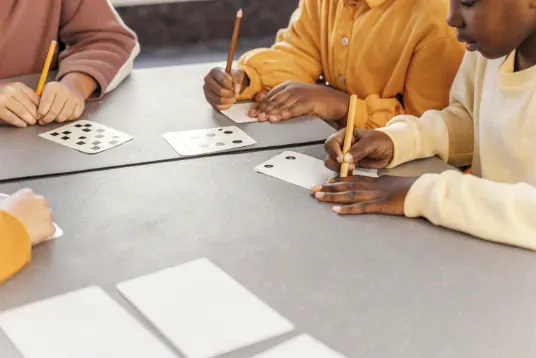
How to Do Mental Math in Card Games
Card games in casinos require you to quickly add up and compare numbers. Players are always adding up their card totals, comparing their hands, and figuring out if getting more cards gives them a mathematical edge. Casino sites like Goldzino and others like it show how these games require long-term mathematical activity. However, teachers should stress studying the mathematical concepts rather than gambling. Regular practice like this improves math skills faster and more accurately in ways that papers don't always work, especially for students who have trouble staying motivated.
Mathematical Operations in Different Types of Games
| Type of Game | Basic Math Skills | Level of Difficulty |
|---|---|---|
| Blackjack | Addition and Comparison | Low to Medium |
| Poker | Odds and Combinations | Medium to High |
| Roulette | Fractions and Percentages | Low |
| Craps | Multiple Operations | Medium to High |
| Slots | Patterns and Percentages | Very Low |
The information in this table shows how different games focus on different math skills. Teachers can pick examples that fit their lesson plans. For example, they could use easier games to teach basic skills and more difficult ones to teach more complex ideas. The important thing is to look at how these games are structured mathematically instead of playing them for fun or to make money.
"Mathematical fluency grows through repeated practice in meaningful contexts. Casino games let students do a lot of calculations quickly, which keeps them interested and helps them learn important math skills."
— Dr. Jennifer Martinez, researcher in math education
Examples of Probability in the Real World to Help You Get Better at Math
Students can better understand why these mathematical ideas are important by making connections between abstract chance ideas and real-life situations. Casino games have clear, measured outcomes that show how chance works in the real world. This helps students see how mathematical predictions tend to match up with actual events over time. This real-world proof makes probability less mysterious and easier to understand for students who have trouble with abstract theories.
How to Change Theoretical Probability to Expected Results
Students usually understand how to figure out individual probabilities, but they have a hard time seeing how these translate into long-term patterns. The house edge in casino games is a great example of this idea because it shows how small changes in odds can add up to big results over many tries. When students figure out that a game gives the house a 52% edge over the players, they can imagine how this 4% difference grows over hundreds or thousands of plays. This link between the chance of a single event happening and the total number of possibilities is a very important mathematics concept.
Utilizations Outside of Gaming Settings
Using examples from games to learn about chance helps students be ready to use the same thinking in real life:
- When choosing insurance, you have to look at the chances of a risk happening and decide if the costs of the premiums are worth the benefits of the policy.
- Investment analysis involves weighing possible returns against the chances of different events and figuring out what risk-adjusted expectations are.
- When making medical choices, patients are often given treatment options with varying chances of success that they must weigh against prices and side effects.
- Probability calculations are a big part of sports strategy because they help figure out the best plays based on win rates in different situations.
- Probability is used in industrial quality control to set acceptable failure rates and come up with good testing methods.
- Probability statements in weather predictions help people make smart planning choices by letting them know about uncertainty.
These examples show that the chance skills you learn from playing games can be used right away to make important decisions in real life. When students know about chance, they can think more clearly about all kinds of risk and doubt.
Getting Better at Math with Actionable Math and Risk Analysis
Functional math skills, which are the useful math skills you need in everyday life, don't always get enough attention in regular math classes that focus on abstract processes. Analyzing casino games is a natural way to practice these useful skills, especially when it comes to planning, number calculations, and figuring out how much risk there is. Students can use these skills right away, and they also help them feel more confident in their math abilities.
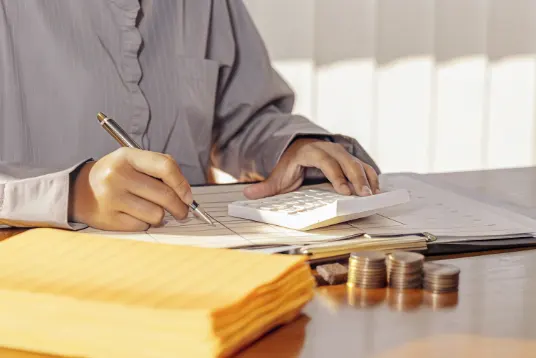
Managing a budget and figuring out percentages
Using casino situations to practice financial math in a real-life setting is helpful. Students can figure out how fast fixed budgets run out when they use different betting tactics. They can also figure out what percentage of their bankroll each bet represents and guess how long their resources will last based on how fast they plan to lose money. These formulas are like the problems you face when you try to manage your daily budget, figure out loan interest, or figure out how much you need to save to reach your goals. Mathematical analysis gives students quick input that helps them see what happens when they make different number choices.
Estimating risk based on expected value
Students can get better at analyzing risks by thinking about the following ideas:
- Probability and payouts are added together in expected value estimates to find the average long-term result for each trial.
- Understanding variance helps you figure out why short-term results don't match up with long-term goals and how to deal with this uncertainty.
- Risk-reward ratios help you figure out if the possible gains are worth the chance of losses in different situations.
- Managing a bankroll means figuring out the right bet sizes based on your total resources so that you can handle standard variation.
- Opportunity cost analysis compares how resources could be used in different ways based on the money they are likely to make.
- Loss boundaries and stopping rules show how set decision points keep emotions from getting in the way of reasonable analysis.
"Students who understand expected value and variance develop more complex frameworks for making decisions. They use these mathematical tools to help them make decisions in a wide range of unclear life conditions."
— Robert Chen, an expert in educational psychology
How to Use Educational Games to Get Better at Math
Game-based learning takes advantage of kids' natural desire to compete while giving them guided practice and feedback right away. When used correctly as teaching tools, casino games offer built-in motivation that most math problems don't have. When math has a reason in an interesting setting, rather than just being an abstract task, students are more interested.
Structured practice with feedback right away
| Ways of Learning | Level of Engagement | Getting Better Skills | Connection to the Real World |
|---|---|---|---|
| Worksheets from the past | Low to Medium | Practice with procedures | Few to Moderate |
| Word Problems | Medium | Using problem-solving skills | High Level |
| Educational Games | High | Getting better at something | Strong |
| Review of Casino Games | High | Multiple skills | Very Strong |
Casino game analysis is both entertaining and a good way to improve math skills in many areas. Students work on math, chance, numbers, and thinking logically all at the same time. They can see right away what their figures have found. This unified method works the same way math does in real life: you need a lot of different skills to solve hard problems.
Explore math on your own and learn on your own
Children are more likely to ask and find their own answers to math problems when they are in situations that feel like games. The problem sets that students are given might not be something they want to do. "Which betting strategy minimizes losses?" or "How do odds change with different game variations?" are better questions for them to ask. People are more interested and learn more when they come up with their own ideas instead of being given jobs from outside sources. Students learn how to do study, try ideas with math, and feel better about their math skills when they use them in new ways. They need to be able to learn math on their own in college, so this gives them practice.
Getting More Confident by Mastering
Many students don't feel confident in their math skills until they do well at it over and over again in fun situations. When students correctly guess what will happen, figure out the odds, or study game strategies, they see math as a useful tool instead of a scary challenge. This trust can be used in other math situations as well, which lowers anxiety and raises success across the board. Students start to see themselves as people who "can do math" instead of people who still find math hard to understand.
Conclusion
Casino games are great places to practice math, from simple addition and subtraction to more complex ideas about chance. By looking at how these games' math works, students build basic skills, get better at using computers quickly, and learn advanced ways to evaluate risk. This method makes math real and useful by showing how numerical thinking affects choices in the real world. When used correctly as teaching examples, video games can turn complicated math into fun and easy-to-understand lessons that help students think mathematically in all areas of their lives.
Frequently Asked Questions
How can casino games help improve basic math skills?
Casino games help improve basic math skills by requiring constant mental calculations including addition, comparison, percentage calculations, and odds estimation. Students practice these foundational math skills in an engaging context that provides immediate feedback and demonstrates real-world applications of mathematical concepts.
What types of math skills can students develop through casino game analysis?
Students can develop multiple math skills including mental arithmetic, probability calculations, fraction and percentage conversions, pattern recognition, risk assessment, expected value calculations, and budgeting skills. Different games focus on different mathematical operations, allowing teachers to select appropriate examples for various skill levels.
Are casino games appropriate for educational settings?
When used as teaching tools, casino games can be appropriate for educational settings if the focus remains on mathematical analysis rather than gambling itself. Teachers should emphasize studying the mathematical structures and probability concepts behind the games, not the gambling aspects. The games serve as relatable examples that make abstract math concepts more tangible and engaging.
How does learning probability through games translate to real-world applications?
Probability skills learned through game analysis apply directly to many real-world situations including insurance decisions, investment analysis, medical treatment choices, sports strategy, quality control processes, and weather prediction interpretation. Understanding probability helps students think more critically about risk and uncertainty in everyday decision-making.
What makes game-based learning more effective than traditional worksheets for improving math skills?
Game-based learning provides higher engagement levels, immediate feedback, and demonstrates clear real-world connections. Students work on multiple skills simultaneously while seeing direct results of their calculations. This approach leverages natural competitive instincts and encourages self-directed exploration, making math feel more purposeful and less abstract than traditional worksheet exercises.