
Family Style Homeschool Curriculum Lessons from Online Gaming Platforms
Today's homeschooling families are finding new ways to teach by looking at involvement techniques from places they wouldn't expect to find them. The family style homeschool curriculum stresses working together to learn, where siblings of different ages do the same things. This is similar to how digital platforms make spaces that keep people involved. Parents are implementing strategies that prioritize flexibility, personalization, and sustained interest in everything from homeschool planner organization to the selection of homeschool supplies.
Using flexible learning to help the modern homeschool family
A homeschool family structure works best when the lessons are flexible enough to suit different learning styles and hobbies. In contrast to regular classrooms, family style homeschool curriculum lets parents adapt the lessons to each child's stage of growth while still keeping the learning experiences as a whole family.

Learning About Family-Centered Approaches to Education
When kids are homeschooled in a family-style setting, bigger kids can naturally improve their skills by teaching younger siblings. This way of teaching each other builds knowledge, patience, and leadership skills. Reading aloud, doing science projects together, or learning about history as a family are all things that parents can do with their kids.
This method works like game platforms, which make complex experiences that appeal to people of all skill levels at the same time. A good family style homeschool curriculum includes materials that are difficult enough for advanced students to learn while still being easy enough for newbies to understand. This way, everyone can make progress without getting too busy or bored.
Making connections in the community for homeschooling families
Concerns about being alone are common among families who want to teach, but modern education includes strong community networks. Co-ops, field trip groups, sports teams, and clubs for specific interests all offer regular ways to meet new people. A lot of families plan weekly trips to the park or classes where kids can learn with their peers.
"The strength of family style homeschooling lies in its ability to create customized learning experiences while maintaining strong family bonds and community connections that support both academic and social development."
Through forums, social media groups, and virtual events, online organizations also help families who homeschool. Parents can share tools, work through problems, and enjoy successes in these online spaces. There is a lot more homeschool news now that there are podcasts, blogs, and YouTube feeds that offer daily motivation and useful tips.
The daily learning structure and curriculum for a family-style homeschool
Balance between order and freedom is necessary when implementing a family style homeschool curriculum. Families that teach their kids well set up routines that keep things predictable while also letting them change based on the kids' hobbies, energy levels, and sudden chances to learn.

Making Good Frameworks for Homeschool Schedules
A good homeschool schedule usually sets aside time for core topics like science, math, and language arts, while also giving time for kids to learn by exploring. A lot of families use the morning, when kids are most awake, to do focused schoolwork and the afternoons for hands-on projects, physical exercise, and creative activities.
Instead of strict schedules, the homeschool schedule might have regular beats. Some families use weekly loops where certain topics come up on certain days, while others like to cover all key areas every day. Families can study harder some months and take longer breaks other months thanks to seasonal plans.
| Schedule Component | Morning Block | Afternoon Block | Evening Activities |
|---|---|---|---|
| Core Academics | Math, Language Arts | Science, History | Reading Aloud |
| Age Groups | Individual Work | Family Projects | Family Discussion |
| Duration | 2-3 hours | 1-2 hours | 30-60 minutes |
| Flexibility Level | Structured | Semi-flexible | Highly Flexible |
Changing the lessons to fit different ways of learning
Even within the same family, kids often have different ways they like to learn. Diagrams, charts, and other items with pictures help people who learn best by seeing them. Discussions, podcasts, and public speaking are all great ways for auditory learners to learn. Movement, hands-on activities, and physical objects are important for kinesthetic learners.
Multisensory methods are used in family style homeschool education to account for these differences. As part of a history lesson, students might read original sources, watch video clips, build models, and put on plays. This variety of methods makes sure that every kid can interact with the material in the way that works best for them while also learning about other ways to do things.
Homeschool supplies and a planner in a digital classroom
With the rise of technology in homeschooling, organization tools have changed a lot. There are both paper and digital versions of today's homeschool planners, which help families keep track of progress, plan lessons, and keep records of learning for legal reasons.
Picking out and putting away school supplies
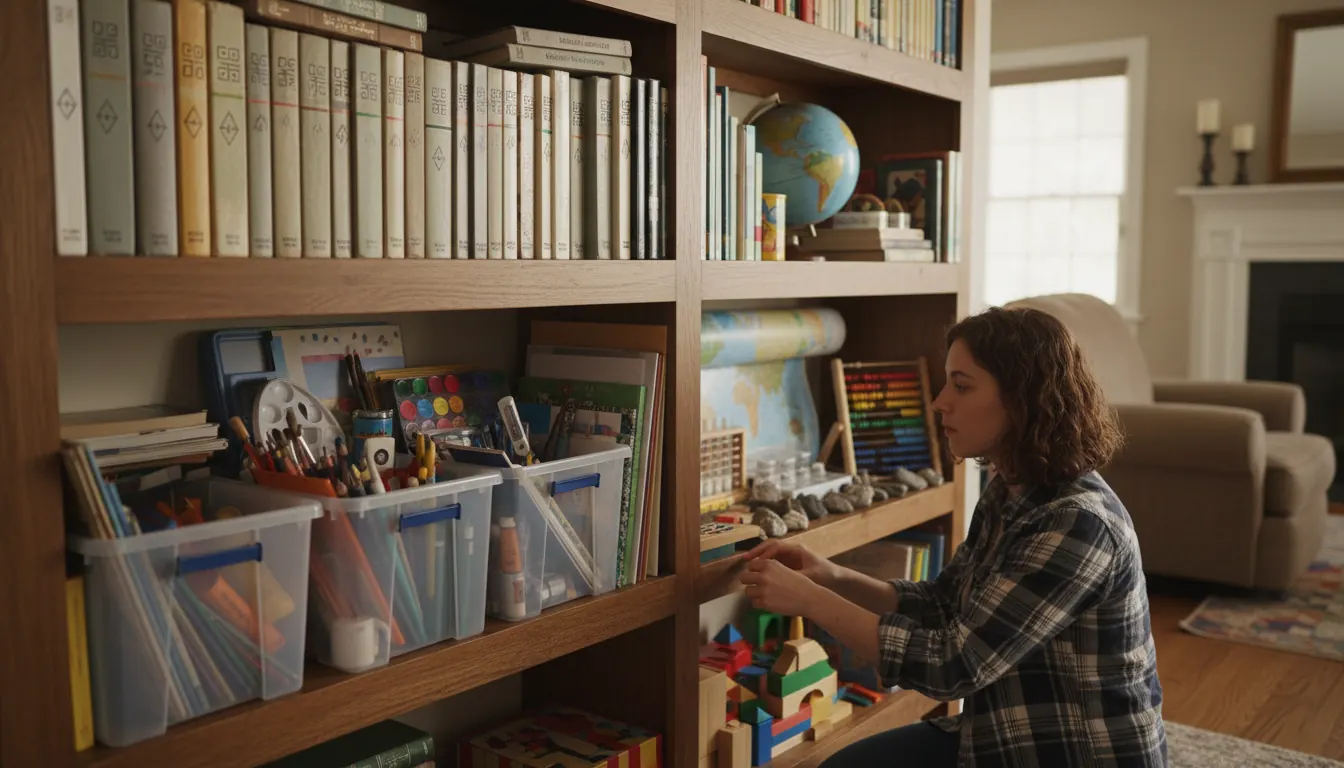
Different educational styles and grade levels require different essential homeschool supplies. However, most families keep basic things like good writing tools, paper, art supplies, math manipulatives, and reference books on hand. There are many ways to store things, from classroom-specific shelves to movable caddies that can be used to turn living rooms into classrooms.
Digital tools have greatly decreased the need for physical supplies. Online classes, educational apps, virtual field trips, and e-books can be used in addition to or instead of traditional resources. A lot of families use a mix of methods, mixing physical activities with the ease of using technology. In a science class, real lab kits might be used along with computer models that show ideas that can't be tested at home.
Putting in place digital systems for tracking and planning
Digital apps for homeschool planners have features that paper calendars can't match. Parents can handle their kids' schooling from any device thanks to automatic grade calculators, progress tracking for multiple kids, program libraries, and cloud synchronization. Some platforms make it easy to make a portfolio, manage attendance, make schedules, and check grades all in one place.
- Cloud-based plans: Let you view your school records from multiple devices and back them up automatically.
- Tools for curriculum mapping: Help find topic gaps and make sure lessons are in line with state guidelines.
- Dashboards for tracking progress: Give each kid a visual record of their progress through the classes.
- Report generation by computer: Make papers and progress reports to follow the law or for college applications.
- Resource libraries: Set up links to websites, PDFs, movies, and other materials that are organized by grade and subject.
- Features for working together: Let students see their tasks and turn in their work electronically.
- Tracking your budget: Keep an eye on school costs and compare the prices of different courses.
Digital sites use interaction techniques that can be used to improve educational technology. For example, online casinos like royal spinia keep people interested by using sophisticated user interface design, reward systems, and personalized experiences. These are all techniques that educational software makers are using more and more to make learning settings that are more interesting. Parents can think more critically about educational technology when they understand these ways that it can keep kids interested.
Homeschooling for families who travel and programs that don't depend on where they are
One of the best things about teaching is that it can be done anywhere. Homeschool programs for families who travel make it easy for kids to keep learning whether they are at home, visiting family, or going to new places.
Creating lessons for people who live on the go
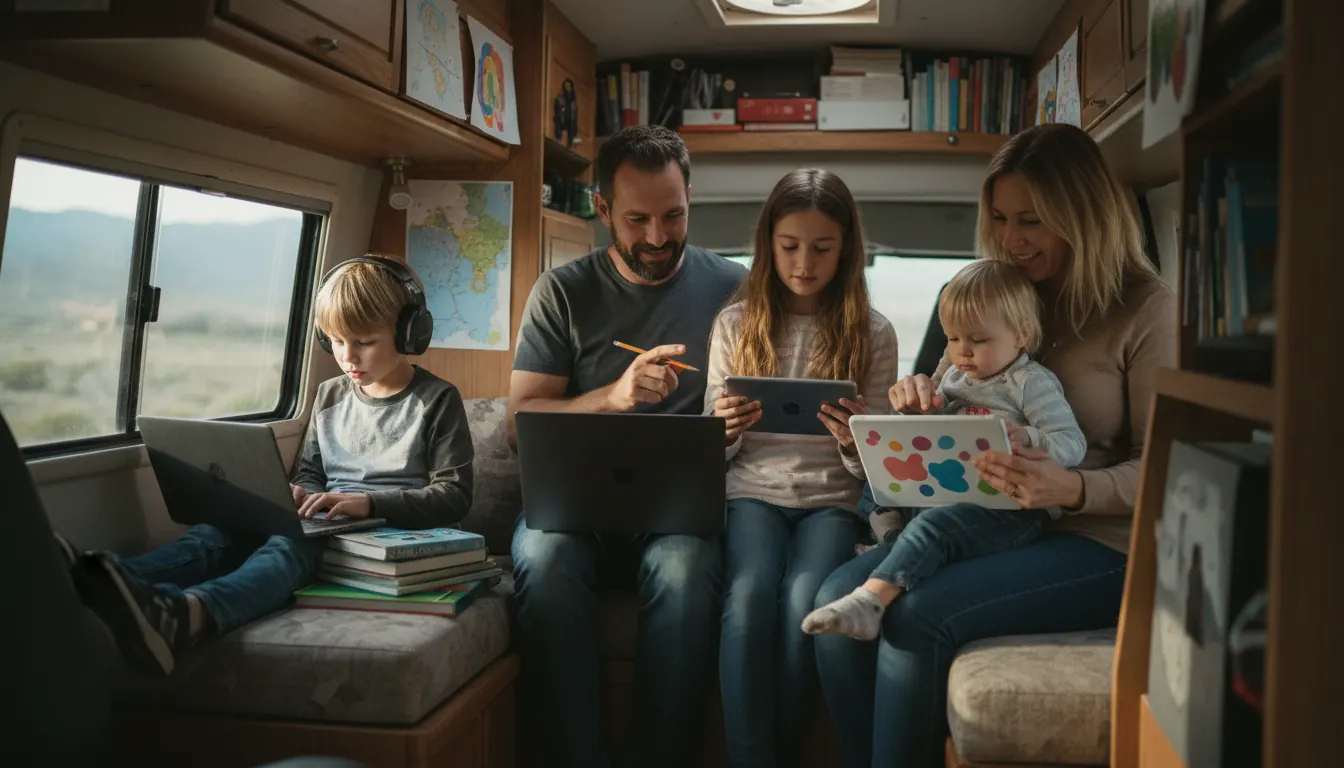
Families that move need to carefully plan their homeschooling around tools that can be taken with them and reliable internet access. A lot of families who travel depend on digital curricula that sync across devices. This way, kids can keep up with their lessons from hotels, campgrounds, or cousins' houses. When connection is weak, offline features become very important.
The act of traveling itself can teach you something. Going to museums, national parks, historical places, and culture centers is a great way to learn that you can't get from reading books. Kids learn more about geography and history when they explore new areas, and they get better at language when they spend a lot of time in places where people speak different languages.
Keeping up with schoolwork while traveling
Families that move and teach successfully set up portable habits that can be used in different places. Reading and math in the morning could happen anywhere, and events in the afternoon would include things that are unique to that place. Some families make days when they travel school-free and then study harder when they are stuck in one place.
"Location-independent homeschooling turns the world into a classroom, where every destination offers unique learning opportunities that deepen understanding far beyond what traditional education can provide."
- Portable curriculum materials: Digital textbooks, e-readers, and tablet-based learning make educational materials portable. No more carrying around a lot of books.
- Offline teaching apps: Before going to a place with slow internet, download lessons, reference materials, and exercises.
- Educational services by subscription: You can get to huge collections of information from anywhere with internet access.
- Virtual teacher support: Talk to online teachers or trainers from anywhere in the world.
- Travel diaries: Keep travel diaries to record your experiences as part of your writing program and to make permanent educational records.
- Local learning opportunities: Look into the libraries, museums, workshops, and classes that are close to your goal.
- Time zone management: Stick to the same study routines or get used to new time zones slowly.
Writing lessons for homeschoolers and keeping up with homeschool news
Building strong writing skills is still an important part of good home education. The homeschool writing curriculum should go from simple sentence structure to complicated essay writing and creative expression in a planned way.

Putting in place complete writing instruction
Regular practice in different types of writing, like story, expository, convincing, and technical writing, is an important part of good writing education. Copywork and dictation are good ways for young kids to learn how to write by hand and understand correct language and phrasing. As students get older, they start to summarize, outline, draft, and edit their own writing.
| Writing Stage | Primary Skills | Sample Activities | Assessment Methods |
|---|---|---|---|
| Early Elementary | Letter formation, Copywork | Tracing, Dictation, Journaling | Handwriting rubrics |
| Upper Elementary | Paragraph structure, Grammar | Essays, Reports, Creative stories | Peer review, Checklists |
| Middle School | Research skills, Citations | Research papers, Presentations | Rubric-based grading |
| High School | Analytical writing, Rhetoric | Literary analysis, Argumentative essays | College-prep standards |
Family-style writing methods include writing emails that talk about family activities and learning experiences or working together to tell a story where everyone writes a part. These real-world examples turn writing into something useful and interesting instead of just an academic practice.
Reading about homeschooling news and trends in education
Families can stay up to date on changes to the law, new education ideas, study results, and community events through homeschool news. Parents can make smart choices about how to teach their kids, stay in line with the rules, and find new tools by following reliable sources.
Homeschool news sites cover new laws that affect the rights of parents to teach their children, changes to standardized tests, rules for getting into college for homeschooled students, and new educational ideas. Parents can meet education providers, go to classes, and network with other homeschoolers at conferences, both online and in real life.
Social media has made homeschool news more accessible to everyone, letting families share their successes and struggles and build communities of support. But parents should think carefully about the sources of information they use, telling the difference between practices based on facts and those based on anecdotes, and they should get more than one point of view before making big changes to their child's schooling.
Today, homeschooling families have access to more tools, groups, and flexible ways to learn than ever before. The family style homeschool curriculum, along with thoughtful planning tools, high-quality supplies, and programs that can be used in any location, provides learning experiences that are tailored to each student's preferred learning style while also building family bonds. By reading homeschool news, families can stay up to date on changes in the world while still sticking to their educational goals.
Frequently Asked Questions
What is a family style homeschool curriculum?
A family style homeschool curriculum is an educational approach where siblings of different ages learn together, often studying the same topics at varying depth levels. This method allows parents to teach multiple children simultaneously while adapting content to each child's developmental stage, creating collaborative learning experiences that strengthen family bonds.
How do homeschool programs for traveling families work?
Homeschool programs for traveling families utilize digital curricula that synchronize across devices, allowing children to continue their education from any location with internet access. These programs often include offline capabilities, portable resources, and flexible schedules that integrate travel experiences as educational opportunities while maintaining academic continuity.
What essential homeschool supplies do families need?
Essential homeschool supplies include quality writing instruments, paper products, art materials, mathematics manipulatives, and reference books. However, many families now supplement or replace physical materials with digital resources like e-books, online courses, and educational apps, creating hybrid learning environments that combine tactile experiences with technological convenience.
How can families create an effective homeschool schedule?
An effective homeschool schedule balances structure with flexibility by blocking core academic subjects during peak alertness hours (typically mornings) while reserving afternoons for hands-on projects and creative activities. Many families use weekly loops, seasonal schedules, or daily routines that provide predictability while allowing adaptation based on interests and energy levels.
What should a homeschool writing curriculum include?
A comprehensive homeschool writing curriculum should progress systematically from basic skills like copywork and dictation through advanced composition including narrative, expository, persuasive, and technical writing. Effective programs incorporate regular practice across genres, peer review, revision processes, and real-world applications that make writing purposeful and engaging.